Picking the best forex broker is not about finding the “number one” — it is about finding the one that will not get in the way of your specific strategy. We opened live accounts with IG, Interactive Brokers, Saxo Bank, and CMC Markets, deposited real money, executed trades during London and New York sessions, tested withdrawals, and called support lines at inconvenient hours. These four survived every filter we applied. Below is everything we found, structured so you can skip straight to the section that matters most to your situation.
What Is Forex Trading and Why Does the Broker Choice Matter So Much?
Forex trading is buying one currency while simultaneously selling another, speculating on whether the exchange rate between the two will rise or fall. The market runs 24 hours a day, five days a week, across a decentralized network of banks, institutions, and retail brokers — no single exchange, no closing bell.
The scale is staggering. The BIS Triennial Central Bank Survey measured daily forex turnover above $7.5 trillion — more than every stock exchange on the planet combined. Retail traders represent a small fraction of that volume, but the infrastructure they trade through — the forex broker — determines everything about their experience: the prices they see, the speed of execution, the cost per trade, and whether their funds are legally protected.
This is why broker selection is not a cosmetic decision. A pip of additional spread on EUR/USD costs a scalper thousands over a year. A broker without tier-1 regulation can freeze withdrawals with no legal consequence. A clunky platform costs you entries during volatile moves. The broker is the foundation. Get it wrong and nothing else you do in the market matters.
Here is the reality check before we continue: the majority of retail forex accounts lose money. Every regulated broker publishes this statistic. If you are new to currency pairs, leverage, margin, and lot sizing, understand the risk before you fund an account. You need four things before your first trade:
- A broker regulated by at least one tier-1 authority
- A platform you have stress-tested on a demo account
- Capital that will not affect your life if it disappears entirely
- A risk management plan written down before you place a single order
Best Forex Brokers 2026: Side-by-Side Snapshot
The best forex brokers in 2026 separate into clear lanes: IG for the trader who wants everything in one place, Interactive Brokers for the cost-obsessed professional, Saxo Bank for the internationally minded investor, and CMC Markets for the chart-driven technician. This forex brokers list reflects our weighted scoring across regulation, costs, platforms, range, and support.
| Broker | Strongest Suit | Key Regulators | Platform Family | Deposit Barrier | Serves US Traders? | Score |
|---|---|---|---|---|---|---|
| IG | Breadth + education | FCA, CFTC/NFA, ASIC, BaFin, MAS | IG Platform, ProRealTime, MT4 | Low | Yes (tastyfx) | 9.4 |
| Interactive Brokers | Cost efficiency + API | SEC, CFTC/NFA, FCA, ASIC, MAS | TWS, IBKR Mobile, Portal | None | Yes | 9.3 |
| Saxo Bank | Research + custody | FCA, DFSA, MAS, ASIC, FINMA | SaxoTraderGO, SaxoTraderPRO | Moderate | No | 9.1 |
| CMC Markets | Charting + spreads | FCA, ASIC, BaFin, MAS | Next Generation, MT4 | Low | No | 9.0 |
Scoring weights: trust and regulation 25% · trading costs 25% · platform and tools 20% · market range 15% · service 15%.
Forex Broker Reviews: Four Brokers, Four Different Traders
Every top forex broker on this list solves a different problem. We structured these forex broker reviews around the type of trader each broker serves best, not around arbitrary rankings.
IG — The Best Forex Broker for Traders Who Want One Account for Everything
IG wins the best forex broker title because no competitor matches its combination of market access, education quality, and regulatory coverage — including a clear pathway for US traders through tastyfx.
| Score | 9.4 / 10 |
| Regulators | FCA, CFTC/NFA (tastyfx), ASIC, BaFin, MAS |
| Platforms | IG Trading Platform, ProRealTime, MetaTrader 4 |
| Instruments | 80+ forex pairs, 17,000+ total markets |
| US availability | Yes — via tastyfx entity |
What it is like to trade here. IG’s own platform loads fast, stays stable during NFP releases, and integrates Reuters news and analyst commentary directly into the trading workspace. ProRealTime unlocks institutional charting for an additional fee. MT4 is available but feels redundant once you spend time with the proprietary tools. The educational content — structured courses, daily market videos, webinars with real analysts — remains the deepest in retail forex. If you are building skills while you trade, nothing else comes close.
What it costs. Standard accounts carry no commission; the revenue sits inside the spread, which on EUR/USD consistently benchmarks among the tightest in the retail market. The DMA account strips the spread to near-raw and adds a transparent commission, pulling all-in costs toward institutional territory. Swap rates are reasonable. No inactivity fee lurks in the background waiting to drain dormant accounts.
Why you can trust it. IG Group has been operating since 1974 and trades publicly on the London Stock Exchange. Funds are segregated across every jurisdiction. Negative balance protection applies where regulators mandate it. The track record here is measured in decades, not marketing claims.
The catch: IG’s enormous product catalogue — indices, shares, options, commodities — is a distraction trap for beginners. The temptation to spread across markets before mastering one is real and costly.
Bottom line: IG is the default recommendation for anyone who does not yet know exactly what kind of trader they are. It does everything well, and the tastyfx brand gives US residents a compliant entry point.
Interactive Brokers — The Best Forex Trading Platform for Algorithmic and Professional Traders
Interactive Brokers owns the best forex trading platform title for anyone who treats trading as engineering — lowest costs, deepest API, and infrastructure built for machines as much as humans.
| Score | 9.3 / 10 |
| Regulators | SEC, CFTC/NFA, FCA, ASIC, MAS |
| Platforms | Trader Workstation, IBKR Mobile, Client Portal |
| Instruments | 100+ forex pairs, 150+ global exchanges |
| US availability | Yes — direct |
What it is like to trade here. Trader Workstation is not friendly. It is powerful. The difference matters. TWS supports complex conditional orders, scanner-driven strategy automation, real-time portfolio risk analytics, and a fully documented API supporting Python, Java, C++, and REST. If your edge comes from code, IBKR is the only retail broker that does not force you to compromise. The Client Portal and mobile app have modernized enough to handle monitoring and simple order entry, but TWS is where the real work happens.
What it costs. IBKR’s tiered pricing delivers the lowest forex transaction costs available to retail traders, full stop. The fixed pricing plan still undercuts most competitors. The real advantage is financing: IBKR passes through near-interbank swap rates, which makes a material difference for swing and position traders holding overnight.
Why you can trust it. Interactive Brokers is listed on Nasdaq, custodies hundreds of billions in client assets, and holds licenses from virtually every major regulator on the planet. Segregated accounts and investor protection schemes are standard.
The catch: TWS was designed for professionals and it shows. A first-time forex trader opening TWS will stare at the screen for twenty minutes before placing a single order. The education resources exist but do not hold your hand the way IG’s do.
Bottom line: If your strategy lives in a Python script, if you calculate cost-per-million-traded, if you need direct market access — Interactive Brokers is where you belong.
Saxo Bank — The Best Multi-Asset Forex Broker for Serious Capital
Saxo Bank earns the best multi-asset forex broker position by offering something no pure-broker can: actual bank custody, premium research integration, and a platform designed for people who think in portfolios, not single trades.
| Score | 9.1 / 10 |
| Regulators | FCA, DFSA, MAS, ASIC, FINMA |
| Platforms | SaxoTraderGO, SaxoTraderPRO |
| Instruments | 185+ forex pairs, 70,000+ instruments |
| US availability | No — international clients only |
What it is like to trade here. SaxoTraderGO is the most visually polished proprietary forex platform on the market. Navigation is intuitive, charting is professional-grade, and the research layer — Morningstar integration, in-house macro strategy, third-party analysis — provides genuine informational edge rather than recycled headlines. SaxoTraderPRO adds multi-monitor workspace management for active traders.
What it costs. Classic tier pricing is competitive. Platinum and VIP tiers, unlocked by balance and volume, bring major-pair spreads close to raw interbank. The structure rewards commitment: the more capital and volume you bring, the more the pricing improves. This is transparent and logical, but it means small accounts do not get Saxo’s best offering.
Why you can trust it. Saxo is a fully licensed Danish bank, supervised by the Danish FSA, with additional tier-1 authorizations across the FCA, MAS, ASIC, and FINMA. Bank-level custody means client assets are held with structural protections that exceed what broker-only entities provide.
The catch: The tiered deposit structure and pricing model naturally favor traders with larger balances. And Saxo does not accept US retail forex clients — it operates across 170+ countries, but the United States is not among them for forex.
Bottom line: For international traders deploying meaningful capital who want bank-grade security and research that actually informs decisions, Saxo Bank is the premium choice.
CMC Markets — The Best Broker for Forex Trading on Technical Analysis
CMC Markets takes the best broker for forex trading title in the technical analysis category, pairing the most feature-rich charting platform in retail forex with genuinely competitive pricing and no commission.
| Score | 9.0 / 10 |
| Regulators | FCA, ASIC, BaFin, MAS |
| Platforms | Next Generation, MetaTrader 4 |
| Instruments | 330+ forex pairs, 12,000+ markets |
| US availability | No — international clients only |
What it is like to trade here. The Next Generation platform is CMC’s competitive weapon. Over 115 technical indicators, 70+ drawing tools, automated pattern recognition, client sentiment data, and module-based customizable layouts — all without a separate charting subscription. If you draw trendlines, run Fibonacci retracements, and rely on price action for entries, this is the best forex trading platform you can access at zero additional cost.
What it costs. CMC sits among the tightest-spread forex brokers in the retail market on major pairs, with no commission on its standard account. The pricing engine is transparent — CMC publishes historical spread data, which most competitors avoid because it invites scrutiny. Swap rates track the broader market without surprises.
Why you can trust it. CMC Markets is publicly listed on the London Stock Exchange, regulated by the FCA, ASIC, BaFin, and MAS. Segregated client funds and negative balance protection where regulation requires it.
The catch: Feature density. The Next Generation platform offers so much that newer traders can drown in options. The learning curve is not as vertical as IBKR’s TWS, but it is meaningfully steeper than simpler broker platforms. CMC also does not serve US retail forex traders.
Bottom line: If your edge is on the chart and you want tight pricing without paying commission, CMC Markets is the platform built for you.
Best Forex Trading Platform in 2026: Proprietary vs MetaTrader vs TradingView
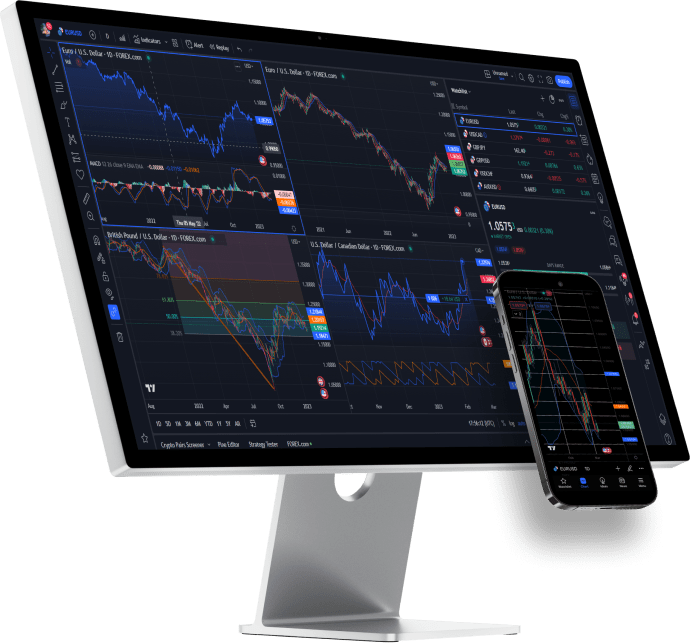
The best forex trading platform is the one your strategy actually requires. MetaTrader 4 still dominates for Expert Advisor automation, MetaTrader 5 extends into multi-asset and hedging, TradingView leads community-driven charting, and proprietary platforms from these four brokers have surpassed MetaTrader in nearly every other dimension.
| Platform | Where It Wins | Automation | Charting Power | Offered By |
|---|---|---|---|---|
| MetaTrader 4 | Legacy EA strategies | MQL4 Expert Advisors | Functional (30 indicators) | IG, CMC |
| MetaTrader 5 | Multi-asset, netting + hedging | MQL5, Python bridge | Improved (38+ built-in) | Select brokers |
| TradingView | Idea sharing, Pine Script | Pine Script strategies | Deep (400+ community indicators) | IG integration, IBKR bridge |
| Proprietary | Speed, broker integration | IBKR API (best), varies | Excellent (CMC, IG, Saxo) | All four |
MT4 Forex Brokers: Is MetaTrader 4 Still Worth Choosing?
MetaTrader 4 remains supported by IG and CMC Markets among our four brokers. Its MQL4 ecosystem still powers thousands of Expert Advisors and custom indicators. But MetaQuotes has frozen MT4 development — no new features, no architectural improvements. If you are starting fresh without legacy EAs to maintain, a proprietary platform or MT5 is the stronger long-term choice. Choose MT4 only when your existing strategy depends on MQL4 code that cannot be migrated.
Proprietary Platforms vs MetaTrader: A Decision Framework
For the vast majority of forex traders, a best-in-class proprietary platform — IG’s trading platform, TWS, SaxoTraderGO, or Next Generation — outperforms MetaTrader on execution speed, data integration, and user experience. Switch to MetaTrader only if:
- You depend on MQL4 or MQL5 scripts that cannot be rebuilt
- You need identical platform continuity across multiple broker accounts
- You actively use MT4/MT5 marketplace signals or add-ons
- Your broker’s proprietary platform is weak — which is not the case for any of our four
Copy Trading in 2026: What Works, What Does Not, and Where These Brokers Stand
Copy trading lets you mirror another trader’s positions in your own account automatically, scaling trade size proportionally to your balance. The concept is simple. The execution is where most people lose money — because copying a trader means copying every drawdown, every bad week, and every strategy failure along with the wins.
The 2026 copy trading landscape has added AI-assisted filtering that attempts to surface signal providers with better risk-adjusted consistency. The technology has improved. The fundamental problem has not: past performance does not predict future results, and most copy trading leaderboards display returns without showing maximum drawdown, Sharpe ratio, or account longevity.
How do our four brokers approach this? Honestly — none of them makes copy trading a centerpiece product. IG offers social trading functionality within its broader ecosystem. Interactive Brokers takes the engineering approach — its API marketplace and signal subscription tools let sophisticated traders build or follow algorithmic strategies with full transparency into the underlying logic. Saxo Bank and CMC Markets focus on giving traders the analytical tools to make independent decisions rather than copy someone else’s.
Five rules if you choose to copy trade:
- Cap exposure to any single signal provider at 10% of your trading capital — treat it as a portfolio, not a bet
- Demand at least 12 months of verified, drawdown-visible track record before copying
- If you cannot explain the provider’s strategy in one sentence, do not copy it
- Set an account-level hard stop-loss independent of the copied trader’s risk parameters
- Review monthly — cut any provider who exceeds your drawdown tolerance, regardless of cumulative return
Copy trading can accelerate learning if you study why the provider makes each decision. Treating it as passive income is how accounts get emptied.
Low Spread Forex Brokers: What “Low Cost” Actually Means
The low spread forex brokers in this group are Interactive Brokers and CMC Markets for major pairs, but spread alone is a misleading metric. Your real cost per trade is a stack of four components, and brokers who advertise “zero spreads” almost always recover their revenue through wider commissions or inferior execution.
The four layers of forex trading cost:
Spread — the gap between bid and ask. This is the visible cost. On EUR/USD, the best forex brokers maintain this consistently below one pip on standard accounts.
Commission — charged per lot on raw-spread accounts. Converting commission to pip-equivalent cost is essential for comparison. A “zero spread” account with a $7 round-turn commission costs the same as a 0.7 pip spread account with no commission.
Swap (rollover) — the overnight financing charge or credit for holding positions past the daily cutoff. This is invisible to day traders and devastating to position traders who ignore it. IBKR’s near-interbank financing rates give it a structural advantage here.
Slippage — the difference between your intended execution price and the price you actually receive. Measured in fractions of a pip, it compounds across hundreds of trades. Brokers with better liquidity aggregation deliver tighter slippage.
| Profile | IG | Interactive Brokers | Saxo Bank | CMC Markets |
|---|---|---|---|---|
| Scalper (dozens of trades daily) | Low | Lowest — tiered model dominates | Moderate — improves at higher tiers | Low — tight, no commission |
| Swing (days to weeks) | Low | Low — interbank swaps help | Low — bank-grade financing | Low |
| Position (weeks to months) | Moderate — swap drag | Lowest — financing is the edge | Low — favorable for large balances | Moderate |
Regulated Forex Brokers: Your 60-Second Verification Process
A regulated forex broker holds an active license from a financial authority, undergoes mandatory audits, keeps your funds in segregated bank accounts separate from company money, and operates under legal frameworks that hold it accountable. Identifying trusted forex brokers takes less than a minute when you know where to look.
The Tier-1 Regulator Hierarchy
Regulation varies wildly in strength. These are the authorities whose oversight actually protects retail traders:
- FCA (UK) — rigorous capital requirements, mandatory segregated funds, negative balance protection enforced
- CFTC / NFA (US) — the strictest retail forex regime globally; RFED registration, 50:1 leverage cap on majors, FIFO rules, no CFD access
- ASIC (Australia) — strong and recently tightened with new leverage restrictions
- MAS (Singapore) — central bank-grade supervision with high capital thresholds
- BaFin (Germany) — full EU regulatory framework with German enforcement culture
Segregated funds in practice: your broker must hold client deposits in bank accounts completely separate from its operating funds. If the broker collapses, creditors cannot touch your money. Negative balance protection means your losses cannot exceed your deposit — the broker absorbs the difference in extreme market events.
How to Verify Any Broker in 60 Seconds
Open the FCA Financial Services Register. Type the broker’s name. Confirm the status reads “Authorised.” Check that the permissions include dealing in investments as principal. Match the entity name and registered address to the broker’s website. Done. This identical process works on the NFA BASIC database for US brokers, on ASIC Connect for Australian oversight, and on every other tier-1 regulator’s public register.
For fraud awareness, the CFTC Learn & Protect portal catalogs common schemes targeting retail forex traders, including warning signs of unregistered brokers and recovery room scams.
Verification Checklist (5 Steps)
- Look up the broker on the relevant tier-1 regulator’s public database
- Confirm the license is active — not suspended, revoked, or lapsed
- Match the registered legal entity name to what appears on the broker’s website and client agreement
- Cross-check the physical address against a real office — not a PO box or virtual address service
- Search the regulator’s enforcement action database for any fines, warnings, or sanctions
Red Flags That Identify Scam Brokers
- Promises of guaranteed returns or risk-free trading
- Urgency tactics and limited-time deposit bonuses
- No regulatory license or a license from a jurisdiction you have never heard of
- Withdrawal problems paired with demands for additional deposits before releasing funds
- Unsolicited contact through social media, WhatsApp, Telegram, or cold calling
- No visible legal entity, no physical address, no regulation page on the website
Forex Brokers USA: The Real Options for American Traders
US forex brokers operate under the strictest regulatory framework in the world. American traders can access IG through its tastyfx brand (CFTC-registered, NFA member) and Interactive Brokers directly (also CFTC-registered, NFA member). Saxo Bank and CMC Markets are excellent brokers that serve international clients but do not accept US retail forex accounts.
Why the US Market Is Different
The CFTC and NFA control all retail forex activity in the United States. Brokers must register as Retail Foreign Exchange Dealers (RFEDs) and maintain substantial net capital reserves. The rules are specific and non-negotiable:
- 50:1 maximum leverage on major currency pairs (20:1 on minors and exotics)
- FIFO rule — first-in, first-out; you must close older positions before newer ones in the same pair
- No hedging — you cannot hold simultaneous long and short positions in the same currency pair in the same account
- No CFDs — contracts for difference are not available to US retail traders
- Mandatory risk disclosures and capital adequacy reporting
These constraints shrink the list of available brokers dramatically. But the brokers that do operate under CFTC/NFA oversight are among the safest and most credible in the global market.
| Broker | US Retail Forex | US Registered Entity | Access Path |
|---|---|---|---|
| IG | Yes | tastyfx — RFED, NFA member | tastyfx platform and account |
| Interactive Brokers | Yes | Interactive Brokers LLC — RFED, NFA member | Direct — TWS, Portal, Mobile |
| Saxo Bank | No | N/A | Serves 170+ countries, not US for forex |
| CMC Markets | No | N/A | UK, EU, Australia, Asia |
If you are a US resident choosing between the two, the decision comes down to profile: IG via tastyfx for a well-rounded experience with strong education, Interactive Brokers for the lowest costs and professional-grade tooling.
How to Choose a Forex Broker: 7 Questions That Actually Matter
The best broker for forex trading is whichever one aligns with your regulatory needs, cost sensitivity, technical requirements, and trading personality. There is no universal “best” — there is only the best fit. Run every broker through these seven filters before depositing a dollar.
- Is the regulation real? Check the broker’s license against the regulator’s public database. If you cannot find it in under a minute, the broker fails this test. What good looks like: the license number is on every page of the website and verifies instantly.
- What is the total cost per trade? Add spread, commission, and estimated slippage together. Ask about swap rates if you hold positions overnight. Ignore headline claims about “zero spreads” — calculate the all-in number. What good looks like: the broker publishes average or historical spread data for major pairs.
- Does the platform fit your strategy? If you need 40 indicators and custom drawing tools, a minimalist app will not work. If you trade from your phone during a commute, a desktop-only platform is useless. Test every platform on demo. What good looks like: the platform stays responsive during high-volatility events and supports the exact order types your strategy requires.
- How fast and reliable is execution? Look for published execution quality data — fill rates, average slippage, price improvement percentages. What good looks like: the broker publishes an execution quality report at least annually.
- Does it cover the markets you need? Confirm your specific currency pairs are available — including any exotics. Check whether the broker offers spot forex or only CFDs (relevant for US traders where CFDs are banned). What good looks like: 60+ pairs minimum, with spot forex access.
- How does funding work? Check deposit and withdrawal methods, processing times, currency conversion fees, and minimum deposit requirements. What good looks like: same-day withdrawal processing, no fees on standard bank transfers.
- Can you reach support when it matters? Contact support before opening a live account. Ask a technical question. Measure response time and competence. What good looks like: phone and live chat available during all trading sessions, with staff who can answer platform-specific questions.
After running these seven checks, open a demo account with your top choice. Trade 25+ demo positions before going live. Every broker on our list offers a full-featured demo — there is no reason to skip this step.
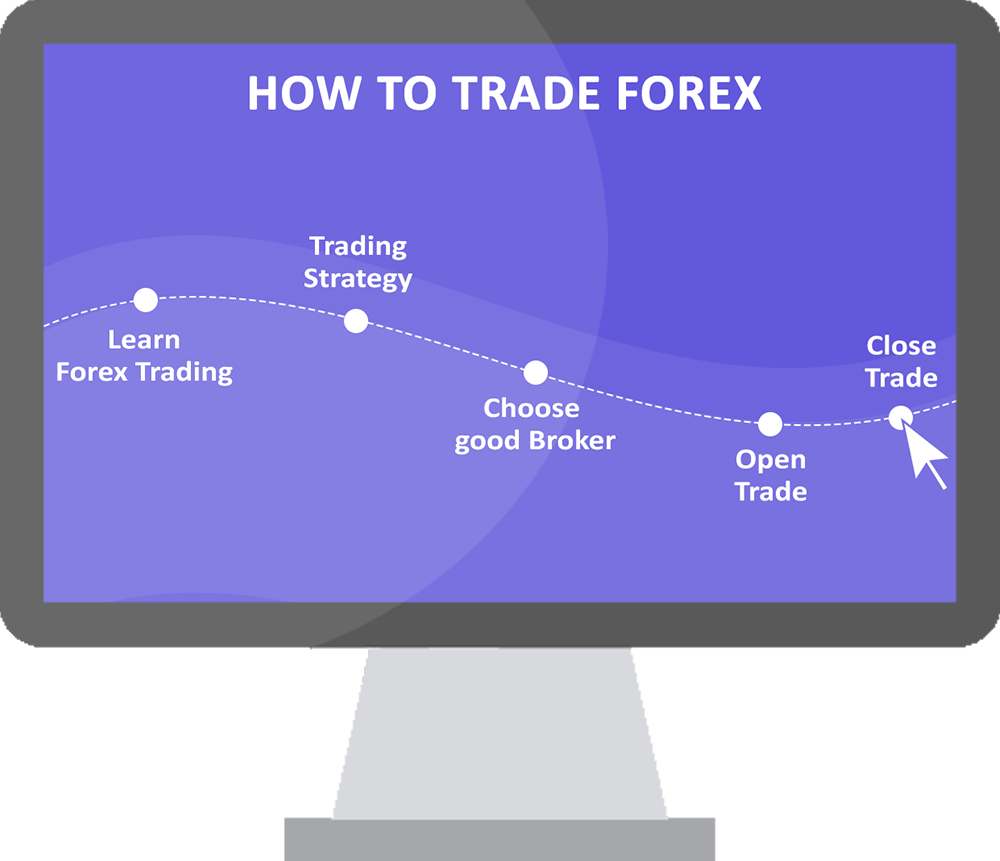
How to Start Forex Trading in 2026: A Practical Sequence
Starting forex trading is straightforward if you follow a disciplined sequence. The mistakes happen when people skip steps — usually the demo trading and position-sizing ones.
Step 1: Verify and select a regulated broker. Apply the 5-step verification checklist above. Confirm tier-1 licensing. Do not enter personal information on any broker website until you have verified its license independently.
Step 2: Open and verify your account. Complete the application and submit identity documents. With our four brokers, approval typically takes one business day. Do not rush this — the compliance process exists to protect you.
Step 3: Fund conservatively. Deposit only money you have mentally written off. For most beginners, this means enough to trade micro lots (0.01 lot = 1,000 currency units) while keeping individual trade risk meaningful but non-catastrophic.
Step 4: Trade 25+ demo positions first. Use the broker’s demo account to learn the platform, test order types, practice entries and exits, and develop a feel for how currency pairs move during different sessions. Twenty-five trades is the minimum for calibrating your expectations against reality.
Step 5: Go live with 1% risk per trade. When you move to real capital, calculate your position size so that your stop-loss distance multiplied by your pip value never exceeds 1% of your account equity. This single rule prevents catastrophic losses during the learning curve.
Step 6: Journal everything, review weekly. Record every trade — entry reason, exit reason, what you felt during the trade, what the outcome was. Review weekly. The patterns in your behavior matter more than the patterns on the chart during your first year.
Leverage warning: Leverage amplifies both gains and losses. A 50:1 leverage ratio means a 2% move against your position wipes out your entire margin. The majority of retail trader accounts lose money. Trade with capital you can lose and position sizes that let you survive losing streaks.
FAQ: Best Forex Brokers 2026
What is the best forex broker in 2026?
IG is the best forex broker overall in 2026 for its unique combination of market breadth, education quality, competitive pricing, and multi-jurisdiction regulation. Interactive Brokers is the strongest alternative for cost-conscious and algorithmic traders who prioritize execution efficiency over educational hand-holding.
What is the best forex broker in the USA?
IG via tastyfx is the best forex broker in the USA for most retail traders, delivering a well-rounded forex experience within full CFTC/NFA compliance. Interactive Brokers is the better fit for US-based professionals, algo traders, and anyone who optimizes primarily for cost.
What are the top 10 forex brokers in the world?
A defensible top 10 forex brokers list globally includes IG, Interactive Brokers, Saxo Bank, CMC Markets, OANDA, Forex.com, City Index, Swissquote, Pepperstone, and XTB. We focus our testing on the top four because they represent the highest combined standard of regulation, technology, and cost transparency.
Which forex broker has the lowest spreads?
Interactive Brokers consistently delivers the lowest total forex trading costs when spread and commission are combined, particularly on its tiered pricing plan. CMC Markets offers the tightest spreads among brokers that charge no commission on their standard account.
Is copy trading profitable?
Copy trading is not reliably profitable over the long term. Individual signal providers may deliver positive returns during specific periods, but most do not outperform passive strategies consistently. The fundamental issue is that past performance does not predict future results, and you inherit every drawdown alongside every gain.
Are forex brokers regulated in the US?
Yes — every broker offering retail forex legally in the US must register with the CFTC as a Retail Foreign Exchange Dealer and maintain NFA membership. The US imposes 50:1 leverage caps on major pairs, FIFO execution rules, a ban on hedging within the same account, and prohibition of CFD trading.
Which forex trading platform is best for beginners?
IG’s proprietary trading platform is the best forex trading platform for beginners in 2026. It balances professional charting capability with an intuitive interface and integrates structured educational content directly into the trading workflow. CMC’s Next Generation is also strong but better suited to traders who already have some chart-reading fluency.
How much money do I need to start forex trading?
You can start forex trading with a few hundred dollars at IG or Interactive Brokers, both of which support micro lot trading at 0.01 lots. The practical minimum is whatever amount allows you to apply the 1% risk rule while still trading a position large enough to be meaningful. Starting extremely small teaches discipline but may also create frustration if profits are negligible.
Final Verdict: Matching the Broker to the Trader
IG is the best forex broker for the broadest range of traders — beginners through advanced, US and international — because it does nothing poorly and several things exceptionally well. Interactive Brokers is the definitive choice for professionals and algorithmic traders who measure success in basis points of cost reduction. Saxo Bank is the premium option for international traders with capital who want bank-level custody and institutional research access. CMC Markets is the platform for the technical trader who lives on the chart and demands tight pricing without paying commission.
There is no universal answer. Match the broker to your capital, your strategy, your jurisdiction, and your skill level. Verify the license on the regulator’s register. Open the demo. Trade small until your journal proves you are ready for more. The market will be open tomorrow.
Risk Disclosure: Leveraged forex and CFD trading carries substantial risk of loss. The majority of retail investor accounts lose money when trading these products. This article is informational and educational only — it is not financial advice, a personal recommendation, or a solicitation to open an account or place a trade. Consider whether forex trading is appropriate for your financial situation and risk appetite. Never trade with money you cannot afford to lose entirely.